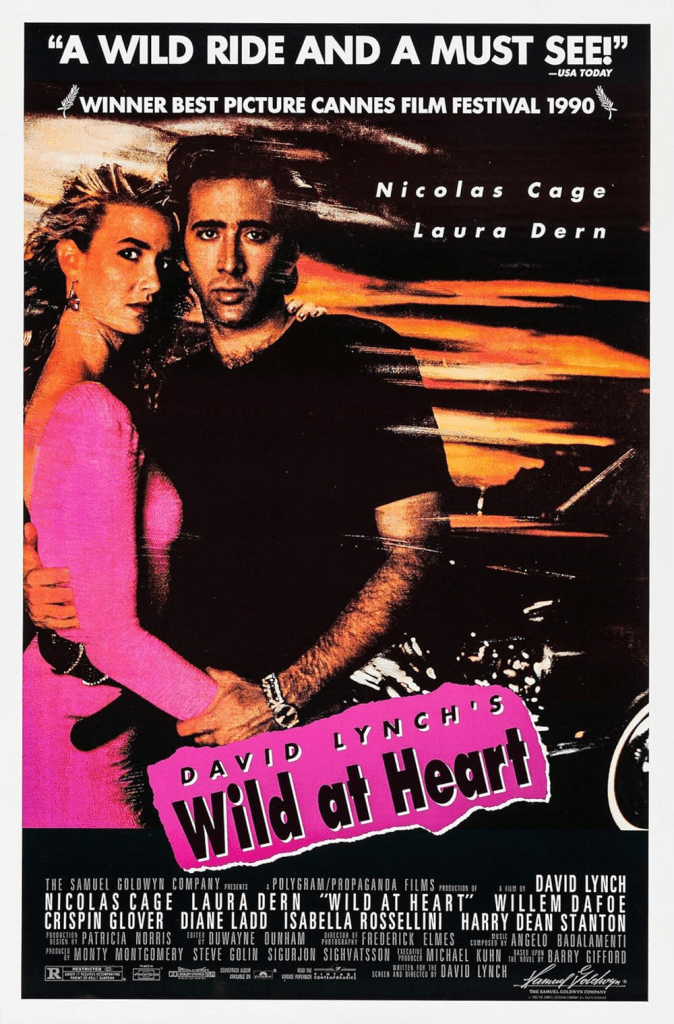
This week I got the fortunate chance to watch Wild at Heart (1990), a film written and directed by one of my personal favorites, David Lynch. It also happens to star another personal favorite of mine, Nicolas Cage, and features in a tertiary role a third personal favorite of mine, Willem Dafoe. I will start this review off by saying that I know I am biased towards these people being on the screen in front of me, or behind the camera creating what is put on the screen in front of me. I hope this doesn’t tarnish my review, but for me, this would be a hard combination of writer/director and actor(s) for me to see in something I wouldn’t enjoy.
Nicolas Cage stars as Sailor Ripley, a young man who is undeniably in love with Lula Pace Fortune, portrayed by Laura Dern, who has worked with Lynch previously (Blue Velvet) and would go on to work with him in the future (Twin Peaks Season Three). Wild at Heart starts with a bang, an unusual beginning for a Lynch work, which is typically a slow burn and long introduction. However, this film comes out the gates with some action, and the story progresses rather quickly. The opening scene features Sailor and Lula leaving a party, walking down an elegant staircase. A man walks up and yells “Hey Sailor, wait! I got something for you.” and pulls out a switchblade. He says that Sailor was trying to fuck Marietta (Lula’s mom) in the toilets. He then proceeds to attack Sailor, and we watch Sailor violently throw this man down the staircase, into the wall, and smash his head into the ground repeatedly. In the background at the top of the staircase, we see Marietta watching from afar. This manslaughter lands Sailor in Pee Dee Penitentiary for about two years. Cut to a time jump when his sentence is over.
Sailor calls Lula’s house to let her know he’s out of the penitentiary, and Marietta answers the phone, enraged that he is trying to contact her. Lula overhears the phone call and in the next scene, we see Lula picking him up from outside the penitentiary with his signature snakeskin leather jacket. This is really where the film begins, as the two decide they are going to shuck his parole, and head for California.
The pacing of this film was rather strange, there were montages of sex scenes between Sailor and Lula, a passionate love story being shown, all the while Marietta is hiring hit men to hunt them down and murder Sailor.
This film has wild disparate tones that clash throughout, and the non-sequitors it is filled with can be off putting to some, but to someone like me, this is what makes a Lynch work interesting. The romance between Sailor and Lula is beautiful and sincere, two souls in a crazy world that have found each other, and understand one another on many levels. After doing some research on this, Lynch is, and I’m paraphrasing here, is quoted as saying the core of this story is “finding love in a world of hell.”
There are some who say that Lynch’s attempts to “OK” the violence in this film with humor are gross and do nothing to allow said violence. Maybe this was true for the time it was released, 36 years ago. For me, I thought it was a smart way to handle a hellish world that we find the characters exist in. The scene in which the clerk’s hand is blown off with a shotgun, and he’s attempting to find it while rolling around on the ground saying “they can sew them back on nowadays.” only to have it cut to a stray dog running with the hand in its mouth may be over the top, but for the world the film exists in, it’s perfectly fitting.
I also read that the film almost received an X rating for the scene in which the villain, Bobby Peru (Willem Defoe) blows his own head off with a shotgun. Again, there is a comedic factor to the end of this scene, where his head rolls and bounces across the floor. They scraped by with an R rating by adding more gun smoke to the scene, to hide the shot of the head detaching from the body.
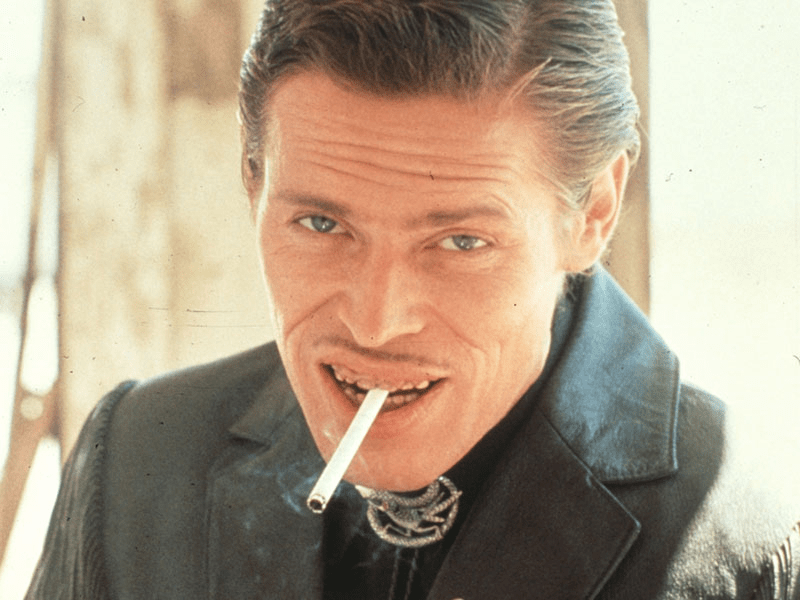
The aforementioned opening scene in which Sailor kills the would be killer, also ends in a similar fashion, with Sailor looking up from the corpse and lighting a cigarette, while blood drips from his hands as he points at Marietta.
The character of Marietta is an over the top town seductress and single mother. She overwhelmingly wants to protect her daughter in all the wrong ways, and has many gentleman callers at her beck and call. Her partner in the beginning of the film, Santos (J.E. Freeman) begs her not to call upon Bobby, alluding to a history of some sort there.
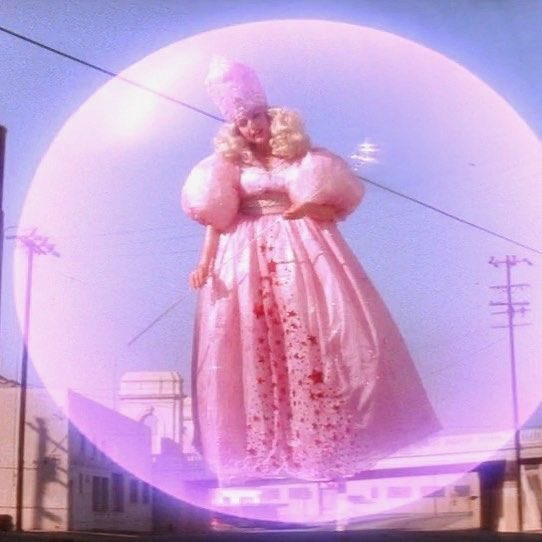
This film is also full of weird Lynchian symbolism, a lot of which, honestly, went over my head. I am still pondering aspects of it days later. I will probably be pondering them for some time to come. Lula talks of hearing wind whistling in her mind as she wonders about life and the world, and at one point we see the Wicked Witch from Wizard of Oz in a vision of Lula’s flying by their car at night as they drive through the desert.
After a tumultuous ride, Sailor is tricked into robbing a bank, and is once again caught and heads back to jail. At this point in the film Lula is pregnant. Sailor serves another sentence, this time six years in length. Once he gets out, we are right back at the start of the movie. Lula again picks him up from the penitentiary, this time with their child in the car with them. Sailor is having deep issues feeling that he is worthy of Lula, and gets out of the car and walks away. He is jumped by some men from the bus station, whom he had an earlier encounter with in which he called them some not so nice things. These men jump Sailor, and as he’s laying on the asphalt, he has a vision of Glinda the Good Witch who tells him “If you’re truly wild at heart, you’ll fight for your dreams. Don’t turn away from Love, Sailor. Don’t turn away from love.” Sailor then runs back to Lula and his child, and the credits roll.
This is a film that I would need to see at least three more times to truly even begin to understand, but upon first viewing(s) I weirdly enjoyed this one, again it may be to my personal bias towards the writer/director and cast, but hey, that’s to be expected.
4 mallards/5
-Seann
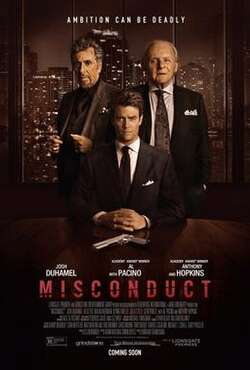
Misconduct (2016) is a movie that boasts some big names, like Al Pacino, Anthony Hopkins, and Josh Duhamel, as well as some roles by solid actors and friends of the blog, such as Malin Akerman (who I much enjoyed in Rampage). Additionally, a decent budget of $11million is nothing to sneeze at, especially for a first-time director in Shintaro Shimosawa (producer on films such as The Texas Chainsaw Massacre from 2022, and Fear the Walking Dead). Pair these aspects with a script rife with drama, deceit, humor, surprise, and gore, a film score by virtuoso guitarist Mattias Eklundh of the band Freak Kitchen, and cinematographer Michael Fimognari (who did the 2019 adaptation of Stephen King’s novel Doctor Sleep), and you have all the ingredients to make a great picture.
Unfortunately, even the best ingredients can’t make a bad dish good.
Where does this film go wrong? Well, there’s quite a few answers to that question, but they’re very…dispersed. There’s not one aspect of this film that is irredeemable across every scene and act, but rather there’s one or two things in each scene that deflate it. In one scene, there’s an actor that’s clearly not offering their best performance, in another there’s a strange shot, in one later on there’s an action with questionable impetus. Overall, it just leaves the viewer scratching their head and wondering why the movie wasn’t very good, but having difficulty explaining why. I’ll explain some of the more egregious occasions of error in this review, but the overall feeling I got from watching this, even after multiple watches, was one of dissatisfaction and apathy.
Firstly, the star-studded cast. Individually, each of these actors and actresses are experts at their craft. There’s no denying that Anthony Hopkins, Al Pacino, and Josh Duhamel have the ever-difficult to define it factor. The Silence of the Lambs (1991) is a film shown in film schools all over the country to teach the youth what a quality thriller should look like. Serpico (1973) is an incredible example of an actor taking on not only the persona but the soul of the character he portrays, and The Godfather (1972) needs no introduction. Josh Duhamel, though obviously of the younger set, has some serious chops, despite largely being known for the Transformers movie franchise. How could a film with these three fall apart? It’s because in this film they’re not acting, but essentially playing themselves.
I don’t mean that they are literally playing themselves, I mean they are playing the type of archetypical character you think of when you consider these actors. Anthony Hopkins plays an old, wealthy man who always seems to be one step ahead of his enemies. I wonder where we’ve seen that before. Al Pacino plays a hot-headed blowhard who likes to hand out advice and doesn’t take anyone else’s. Sound familiar? Josh Duhamel doesn’t participate in the action or make decisions, despite being the main character, because things sort of just seem to happen around him and he has to react to it. Where else does he not have control of what’s going on around him? Maybe in a film or two about giant robots, which may or may not turn into cars.
The characters written into this movie do very very little to transcend the pre-conceived notions of the actors that portray them. It’s almost like the actors were on board before the script was created, and it was molded around the trio of men. The script has its own issues, the biggest being inconsistent character motivations. Why do the characters in this film do the things that they do? Because it’s necessary for the next scene to unfold the way that it does. It’s a series of strange actions and events that are at odds with the established personalities of these characters we’ve come to know from previous scenes. The other big flaw with this script, and really the storytelling in general, is that it relies on withholding information to create drama. None of the actions are themselves particularly dramatic (despite the multiple scenes of violence), but they become dramatic because some detail is being intentionally withheld from us. We’re not transfixed by the story as viewers, we’re just waiting to find out the missing piece that was shielded from us rather unfairly in the writing. Watching this movie a second time, the plot is actually not that interesting whatsoever. A third viewing is yawn-inducing.
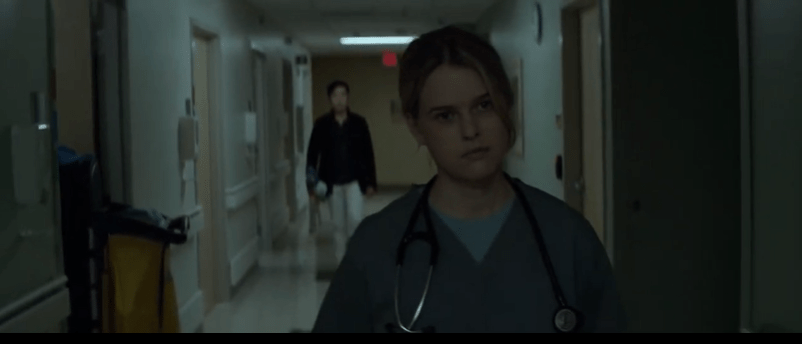
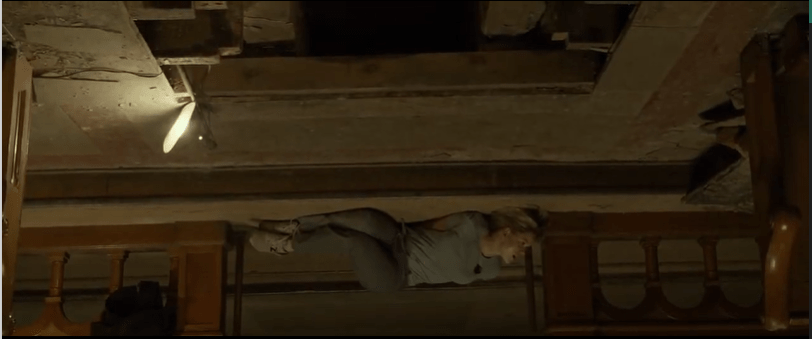
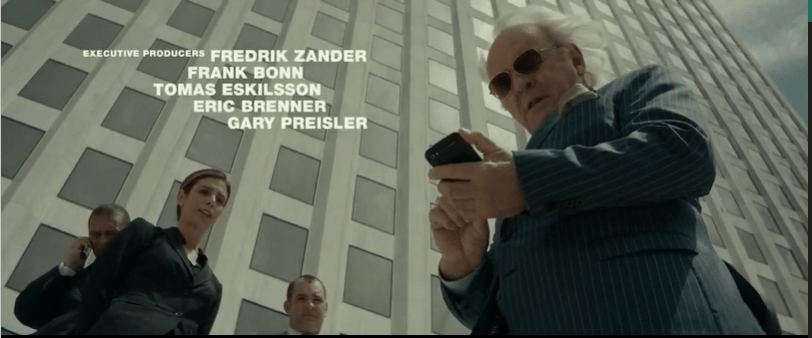
The sound design is similar to the above – hardly noticeable, and when it is noticeable, it ruins what would otherwise be a good scene. As I wrote earlier – this film cannot seem to complete a single scene without some aspect of the production committing a guffaw. Those scenes with the cool imagery? Scenes where the character motivation is shockingly opaque, or where something is ‘revealed’ to us, that was previously hidden simply to create drama. Even the ending scene has poor aspects. The ‘twist’ at the end (which you can actually see coming rather easily on the second watch, now that you’re not being deliberately lied to) is counteracted by, well, abysmal acting from the actress the twist is about. It’s not believable. I’m unable to believe it. This was a movie with potential that just kept getting in its own way, and the experience is just bland, boring, and honestly a bit disappointing.
Misconduct (2016) has a rating of 5.3 out of 10 on IMDB, an atrocious tomatometer score of 7% (!!!!!) on Rotten Tomatoes, and a score of 2.3 out of 5 on Letterboxd. Again, this was a movie with such potential. The fallout of this film is not insignificant – Shimosawa never directed another film. That $11million price tag I mentioned at the start? This movie struggled to scrape together $2million at the box office. Many commenters think this is the worst movie of both Pacino’s and Hopkins’ careers, respectively. I wouldn’t recommend watching this, and there’s not a better word that can be used to sum it up than just… “sad”.
1 mallard/5
-Maxwell
 Mallards Movies
Leave a comment