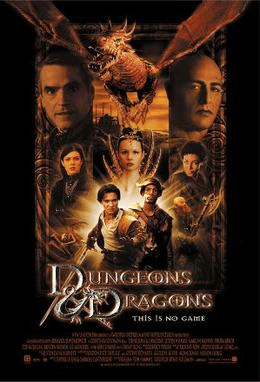
For the first week of March, I had the opportunity to go back and revisit a movie I watched as a kid, Dungeons & Dragons (2000). I remember enjoying it when I was younger, back then I had a cursory knowledge of what D&D was, it wouldn’t be until about four years after the release of this that I would sit at the table and roll dice for the first time. And it has been many times since that I have sat with various groups over the years and rolled dice. Going back to watch this movie 26 years later, with 20 years of D&D experience under my belt, as well as after the release of Honor Among Thieves (2023), I have many thoughts on this movie. To be frank, they are not good thoughts.
This movie is set in an entirely new realm called Izmir, a place that doesn’t exist in the already established lore of D&D. This let them take a lot of civil liberties with the “rules” of D&D, and as an avid player for almost twenty years now, I had many issues with this. The magic system used in the movie is few and far between, and nonsensical. There are people referred to as “mages” in the movie, but they need what is essentially magic fairy dust to cast their spells. Unless they don’t. One of the big bad guys, Damodar (Bruce Payne), is supposed to be a Gish, which is a hybrid fighter/spellcaster class in D&D. From my recollection, he carries a sword, but primarily uses his fists to fight, except for the final fight scene where we actually get a sword fight for once in this movie. He is also a “high level” spellcaster, but rarely uses magic of any kind.
The world that this movie takes place in also features hundreds upon hundreds of dragons, which is an abnormality for pretty much all of D&D. The end scene is a big fight between the protagonists and antagonists over a scepter that can control dragons, while in the background we see Red Dragons and Gold Dragons fighting in the skies. Where do all these dragons reside? How do they not just wipe out the people in this world? Dragons are massively powerful and extremely rare in D&D, making them so prominent, yet not relevant to the story is quite a choice. The only scene of importance with the dragons at all is when one of them eats Profion (Jeremy Irons) at the climax.
The costuming in this movie is rather questionable as well, the elves wear what is clearly made of plastic armor, and it looks comically bad. Not only that, but the armor that the main female elf, Norda (Kristen Wilson), wears is also a 1960s sexist piece. The boobs on it are conical, and obscene.
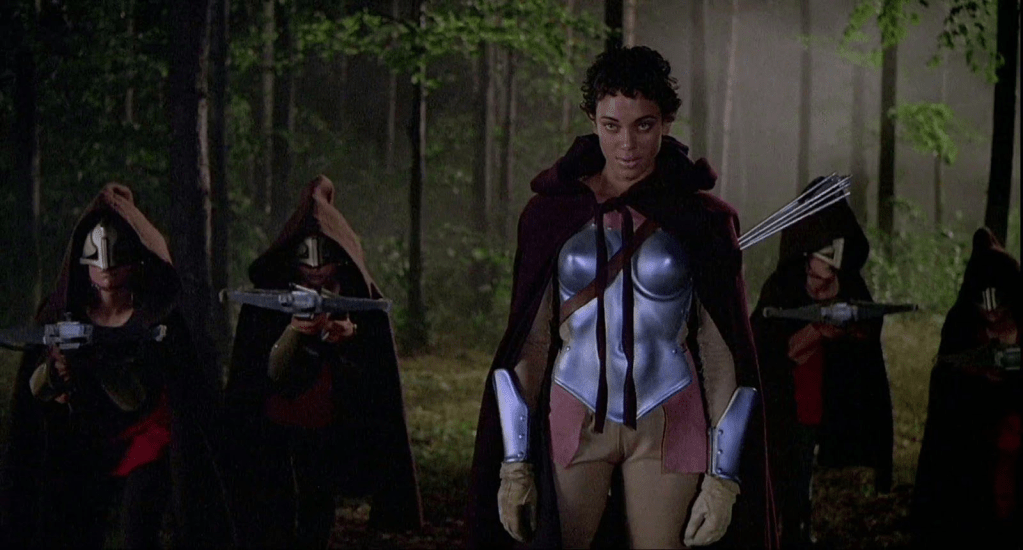
One thing I want to touch on is that in addition to the poor costuming choices is the CGI and effects in this movie. The CGI I want to say is a product of its time, but The Phantom Menace was released only a year prior to this, and Lord of the Rings released only a year later. It is true both of the other movies mentioned had twice the budget of this movie, but this one was still produced by the same company that produced Lord of the Rings. The choreography in the fight scenes is also amateurish, and the fighting occurs so infrequently for it being a D&D movie that’s based on a game where combat is a huge piece of it, that it feels even more lacking.
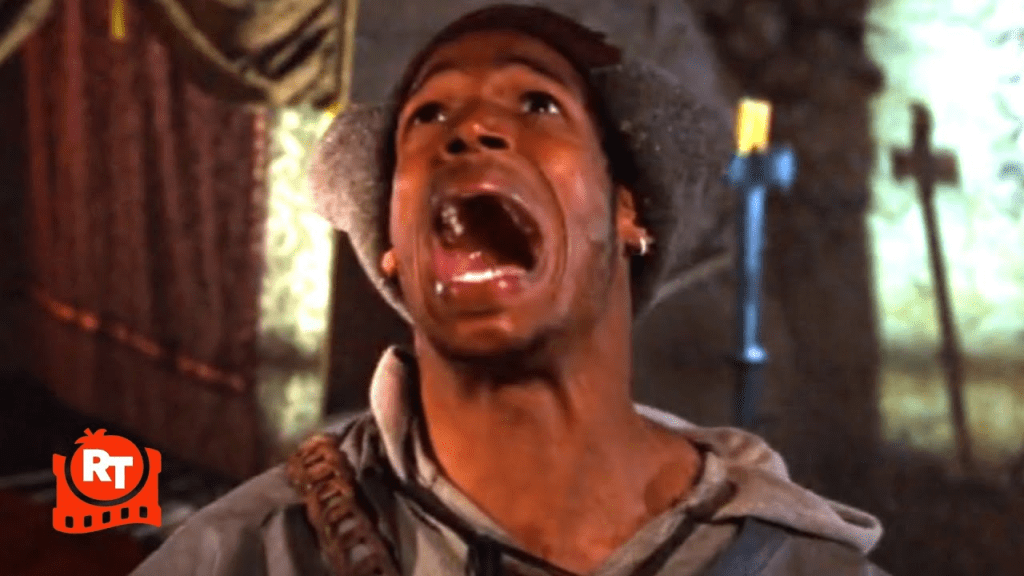
Another issue I had with this movie is the character of Snails (Marlon Wayans), he is supposed to be the comic relief character in this movie, but I don’t think I laughed a single time at any of his humor. He felt like a character that you would find in the Scary Movie franchise. He plays opposite Ridley Freeborn (Justin Whalin), who is the straight man hero protagonist of the movie. The chemistry between the two is sadly not there. It doesn’t work. Is it bad to cheer when a protagonist is killed on screen? Because I did when Damodar killed Snails, despite it being a lame fight and lame way to go.
The rest of the dialogue feels lackluster, and the rest of the acting is over the top in a ridiculous fashion, or very flat, with zero in between. That is, except for Profion. Jeremy Irons seems to be the only actor in this movie that realized exactly the role he was playing. He gives his character his all. He is truly the only saving grace in this one.
This movie’s backstory involves a guild of mages, a new young empress, Savina (Thora Birch) who is trying to free the enslaved people in her land, and change the ways that things have been done for generations prior to her. Non-spellcasters are used as slaves to serve the mages, and our two main characters, Ridley and Snails are slaves that have broken out and are attempting to find treasure or something to buy their freedom or control the dragons. I’m sorry, I wish I knew what exactly they were trying to accomplish, but after having watched it twice, I can not in this moment recall what the initial end goal was for them as it changes throughout the movie, and then the movie just sort of ends. There is a scene that is eerily similar to The Phantom Menace’s Senate Scene. It’s as dry and boring, featuring Empress Savina and Profion arguing over the magic dragon control scepter, and arguing over her wanting to change the ways of life for everyone. It of course ends with the rest of the mages sitting in their chairs in an uproar.
In the end, the heroes get to the magic scepter, and have a boring climactic fight atop a tower while way too many bad CGI dragons fly around in the background and fight one another. Ridley and Damodar have a weird sword fight with the swords spewing elemental magic, that is not relevant or used other than for the visual effect. Ridley then backflips off a ledge and lands behind Damodar, stabbing him in the back with a dagger, killing him in an anti-climactic way. As I mentioned previously, the choreography in this movie is uninteresting.
This is also where the only cool thing involving dragons happen, when a Gold Dragon flies up and eats Profion, while it is “cool” it also feels like a cop out to another boring fight scene.
The movie then ends with the slaves being freed, everyone rejoices, and the heroes are at a gravestone for Snails. They place the magic dragon’s-eye ruby that the heroes needed for their quest upon his grave, and it begins to glow. They then get transported to somewhere, one must assume it’s the spirit realm, to find Snails and bring him back to life. But then the movie cuts to credits and ends. Quite a cheesy ending, to a fully cheesy movie.
I had fond memories of this as an 11 year old kid, but re watching this as an adult, and having seen Honor Among Thieves as well, this movie does not hold up. There are many flaws with it, and I would not recommend it to anyone, be they familiar or unfamiliar with D&D. There’s way too much other and better content for D&D out in the world nowadays. I even watched The Gamers: Dorkness Rising (2008) immediately after my first watch of this one, and that was a college film about a group of friends playing Dungeons & Dragons, and that movie blew this one out of the water in every aspect.
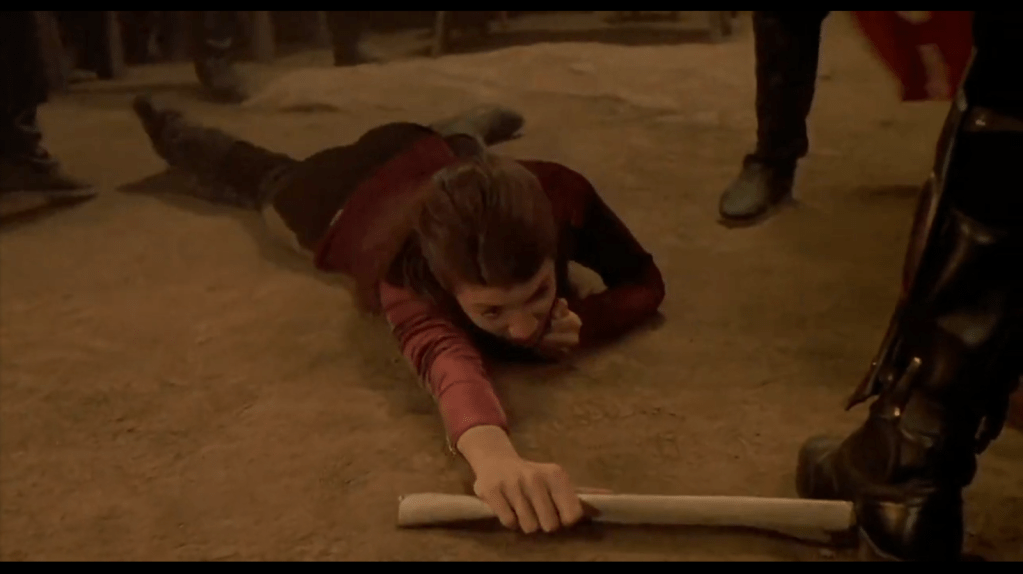
The final thing I will say about Dungeons & Dragons (2000) is about this scene from the middle, where they did the classic “we must get the scroll that holds the secrets” while a fight ensues, and this character is crawling under everyone’s feet to retrieve it. She stretches out her arms to snag it, and Damodar “steps” on it to pin her down, then scoops her up and kidnaps her. Look at the way this is shown on screen though, he steps NEXT to the scroll and she freaks out and stops moving. This scene alone is a perfect example of the shortcomings of this movie.
1 mallard/5
-Seann
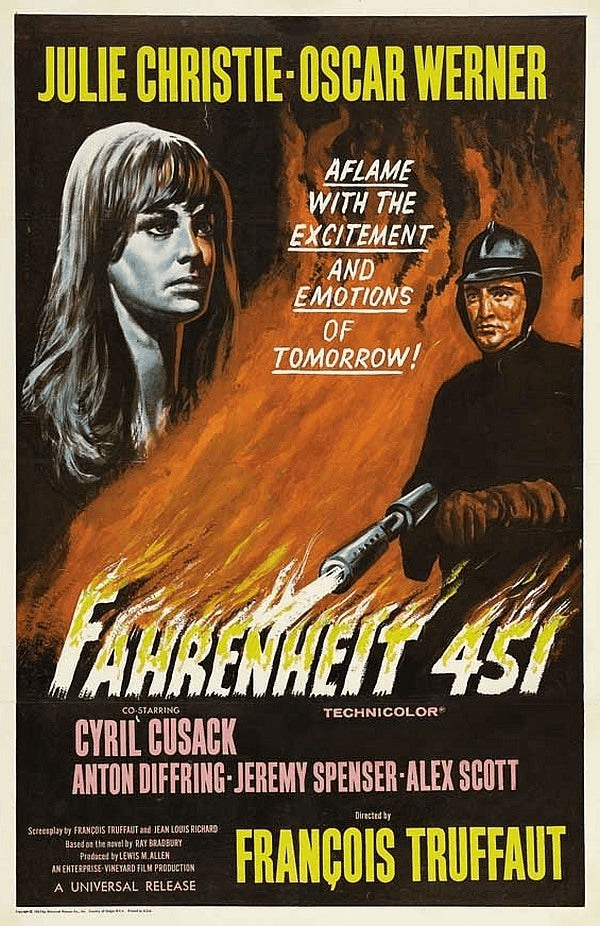
To say that this film is in my wheelhouse is an understatement. Finally, the randomizer throws me a bone and gives me what is, ostensibly, a foreign film (though all dialogue is in English), directed by an auteur (Francois Truffaut, who incidentally directed one of my favorite films of all time, Breathless (1960)), based entirely upon a classic post-modern novel of the 1950’s. It’s like if you fed chat GPT all of my interests, this is the fictional film it would spit out, except this one is completely real. I was ecstatic to watch this one, hence why I picked it first, and it truly did not disappoint. This one is a banger.
First, I’ll touch on my feelings of novels that are turned into films. This is going to be ironic of me to admit, because both this film and Tinker, Tailor, Soldier, Spy (2011), which I reviewed a few weeks back, are getting high marks, but I generally dislike films based on books. I find the mediums are too distinct to truly do justice to one another – for this reason, I also dislike novelizations of films. There are obviously great examples of novels being successfully turned into films, but for every great adaptation, there are dozens of disappointments. This becomes especially true when one considers truly groundbreaking or revolutionary works, such as the eponymous Ray Bradbury novel that this film is based on.
What makes this film succeed, then? I think this film, which doesn’t suffer from some of the convoluted plot of the aforementioned Tinker Tailor Soldier Spy, has just enough plot importance and content to serve as a great platform from which to explore the art of filmmaking. Truffaut is a visionary, and even when handling the work of another creative genius, his fingerprints are everywhere on this film. There are some incredible shots, all made with basic and practical effects, which make this film not only an exciting tale of resistance, but a beautiful spectacle in its own right.
Some highlights (and nerd language for nerds): Truffaut’s use of filmic distance is exemplary. While Montag goes through his mental changes, from book-burning zealot to literary fiend, the camera closes in tighter and tighter on his face, culminating in the climactic moment when Montag makes his fateful decision. We see the world close in on Montag, mirroring the emotions of the character himself while his worldview is shattered and replaced with that to which he was so ardently opposed days prior. Similarly, as he strays further and further from the grasp of the Firemen, we see them depicted as more and more martial like, as opposed to the friendly and jocular men to whom we were introduced earlier in the movie. Remember when one of the Firemen started eating an apple during a raid? By the end they are pulling their pistols on Montag. While Truffaut didn’t create these characters or come up with these events, his use of movie magic to elicit sympathy for Montag in the viewer is something that the written word cannot do. This is not merely a filmed version of the book – it is a film that has entirely different effect on the audience than the book itself has.
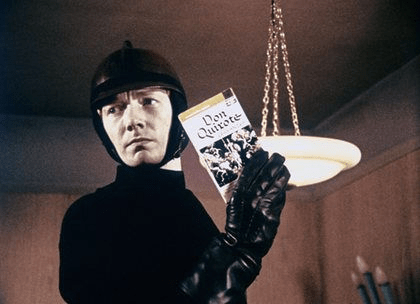
This is a story set in the ‘distant’ future, and the costume and set design reflects that. As the Firemen are now setting fires as opposed to putting them out, their uniforms are fire-retardant, with dark black cloth and black rubber gloves.Despite being futuristic they have a distinct fascist look to them, and the fact that the men are all identical while wearing their helmets is a boon to their militaristic aesthetic. Montag’s home is also a delight to look at. The exterior is the same as all of the other houses on the street, of course, and the inside is very bare. The main attraction inside the house is the television, which Bradbury and Truffaut use as an opportunity to explore the nature of television. Montag’s wife, while ultimately leading to his demise, is a victim of the television, whereas the literature-loving Montag is not portrayed as a victim of literature, but rather he’s set free by it. If Truffaut were alive today, I wonder if he would feel the same about our modern television programming.
While the film has many benefits and is an absolute joy to watch, it is not also without its faults, which is an opinion Mr. Bradbury had himself when asked about the film. The biggest gripe I have with this film is that the wife, Linda, who plays an antagonistic role, and Clarisse, the young woman who first introduces Montag to the wonders of reading, are played by the SAME ACTRESS. Why? There weren’t enough actresses in England? You couldn’t find two able-bodied actresses that were both available to play in a film directed by Truffaut, one of the most celebrated directors of the French New Wave? I’m being facetious, of course – I understand what Truffaut was going for. Juxtaposing the two women and pointing out their differences and similarities by having both characters portrayed by the same actress is an interesting approach, but it does not work out as intended, unfortunately. It ends up just being rather confusing, and honestly it’s a bit baffling why they would make this decision to begin with.
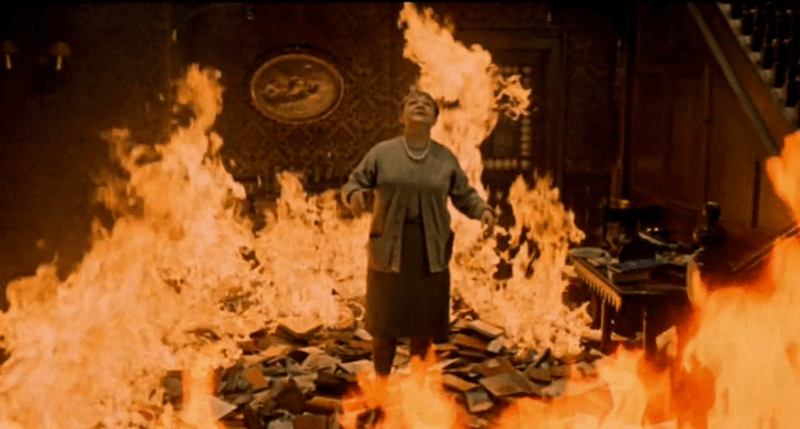
The other much more minor issue I have with the film is that Montag’s first foray into reading is too sudden. He’s merely suggested that maybe he should try reading a book instead of burning it and, despite his 5 years of training, decided that it might be worth a shot. The rest of the film’s pay-offs are absolutely earned, but the sudden decision to read is somewhat unsatisfying. His decision to turn away from the Firemen is expertly done, and the speech by Captain Beatty (Cyril Cusack) is brilliant. It’s the events leading up to this that are a bit suspect, but ultimately have little impact on the overall quality of the film.
To conclude, this is a charmingly artistic film, filled with suspense, directorial genius, and great acting all around. The references to classic works of the day, such as Sartre and Dickens, being burned are great references for those in the know. This is one that I happily watched twice and in fact would recommend to anyone who has read the book or wants to experience some of the finest French film direction. While it’s not perfect, it’s still very very good, and definitely worth a watch. Fahrenheit 451 (1966) has a score of 7.2/10 on IMDB, a Rotten Tomatoes Tomatometer score of 82%, and a score of 3.5/5 on Letterboxd. I think these scores are reasonable overall, and as someone who has a bit of an affinity for multiple aspects of the design and aesthetics of this film, I’m inclined to give it a slightly higher rating, naturally.
4 mallards/5
–Maxwell
 Mallards Movies
Leave a comment