
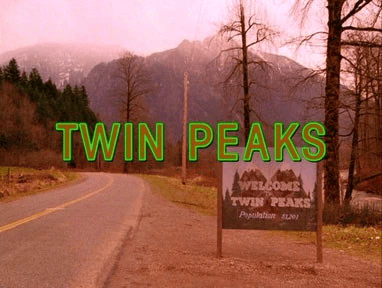
For the first movie of September, I believe Maxwell and I each chose an easy layup of a pick. He chose Talladega Nights: The Ballad of Ricky Bobby (2006) (a movie that we have both discussed and referenced a lot over our friendship), and I chose Twin Peaks (Pilot), also known as Northwest Passage (1989), a movie/TV show that I have loved for many years, and am constantly telling Maxwell how good it is. Not to spoil the ending of my review, but Twin Peaks/David Lynch//Kyle McLachlan are essentially near perfect media/directors/actors in my book. If you haven’t set out to watch the series, I highly recommend you do so.
Technically, the “movie” known as Twin Peaks (1989) is an extended director’s cut of the pilot episode, which is the version that most streaming services have in their catalog nowadays. At the time, it was technically a separate release if my research is correct.
One of the main things that I really enjoyed about this time rewatching Twin Peaks was watching it not from a point of enjoyment entirely, but watching it from an analytical perspective. So much about this show, from the very first episode, is perfectly handled, paced, introduced. The setting is magical in its own right. The characters are vast and interesting and each one feels important in their own way.
If you’re unfamiliar with Twin Peaks, the story takes place in a small town in Washington (my home state!) and starts as a seemingly normal February morning, we are seeing into the lives of small town folk as they are living their lives with many moving parts. One of the beautiful things of Twin Peaks is the ensemble cast and how each character is portrayed and written so deep and ‘real’ from the first episode. Pete Martell (Jack Nance) is setting out to go fishing in the morning, and as soon as he gets to the rocky shore, he sees a body wrapped in plastic. He then calls the local sheriff’s department, and here is when we are introduced to Sheriff Harry S. Truman (Michael Ontkean), Andy (Harry Goaz), and Lucy Moran (Kimmy Robertson). As I’ve already stated, the ensemble cast in Twin Peaks is impeccably done, each of these characters is important to the overall story.
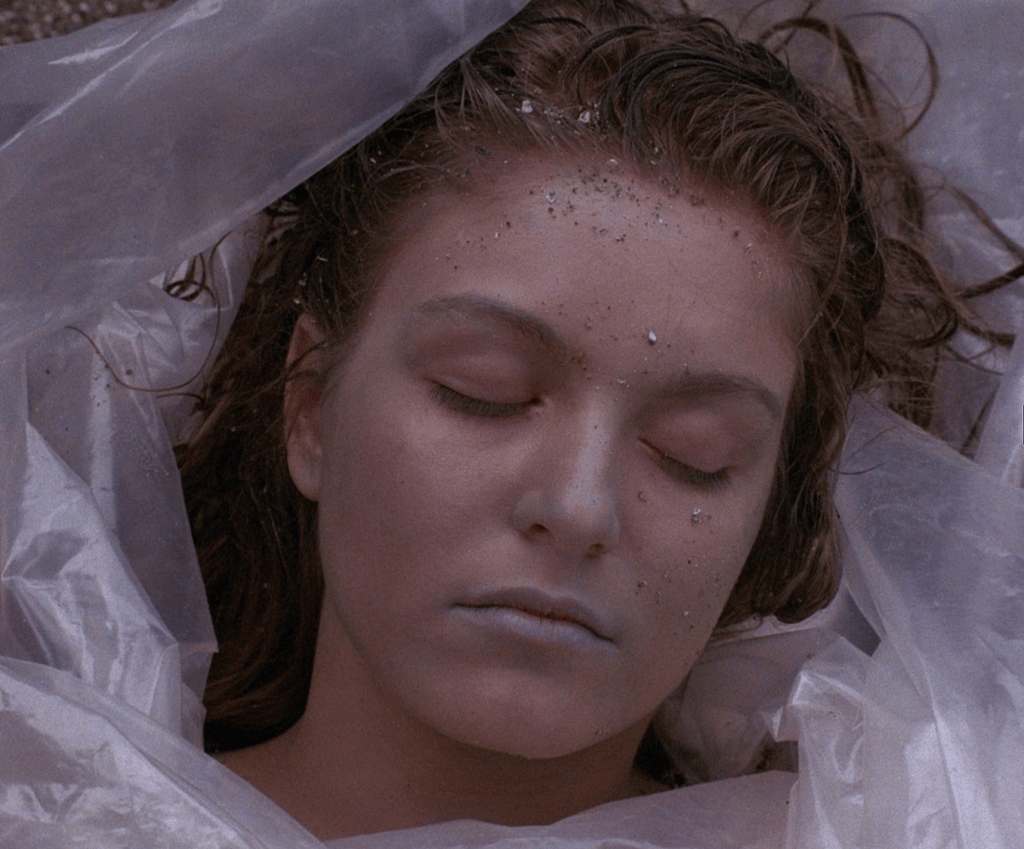
The body that Pete finds is that of local high school senior, Laura Palmer (Sheryl Lee). She went missing sometime the night before or early that morning. I think I mentioned before how great the pacing of Twin Peaks is. As the audience, we know that Laura Palmer is dead. We are shown that her mother is aware that Laura wasn’t in her bedroom when she woke up this morning. They assume she is out with her boyfriend, Bobby Briggs (Dana Ashbrook). While this is going on, we also see that Leland Palmer (Ray Wise) is at work, attempting to make an international deal with some investors from Norway. The dread and build up to the incoming calls and information being given to the parents give the audience an intense sense of worry. Watching it unfold when you already know what’s coming but waiting for the needle to drop has you on the edge of your seat.
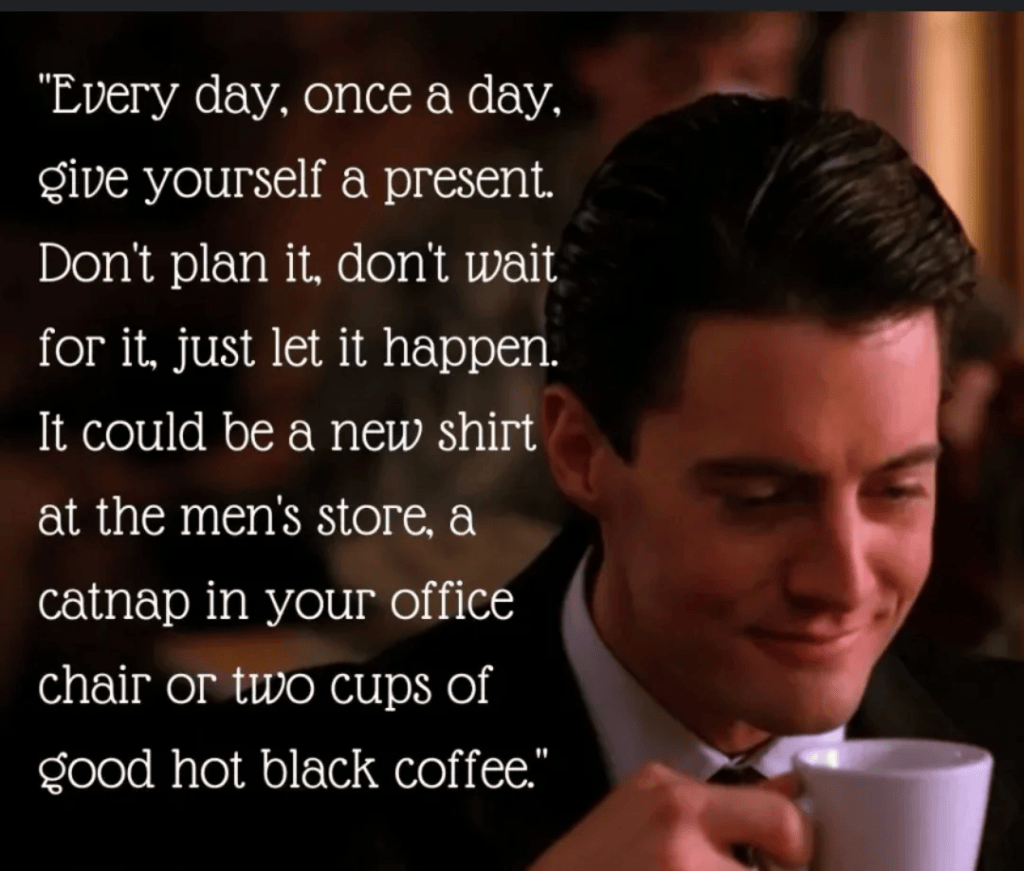
Due to a murder that took place a year prior of Teresa Banks, the FBI is brought in on this case, and we get introduced to the real star of this movie/show, Special Agent Dale Cooper (Kyle MacLachlan). He has one of the most iconic lines of the entire series, as he’s driving into town on his first day, he’s recording his notes on a tape recorder for his assistant, Diane, and he says “Diane, 11:30am, February 24th. Entering the town of Twin Peaks.”
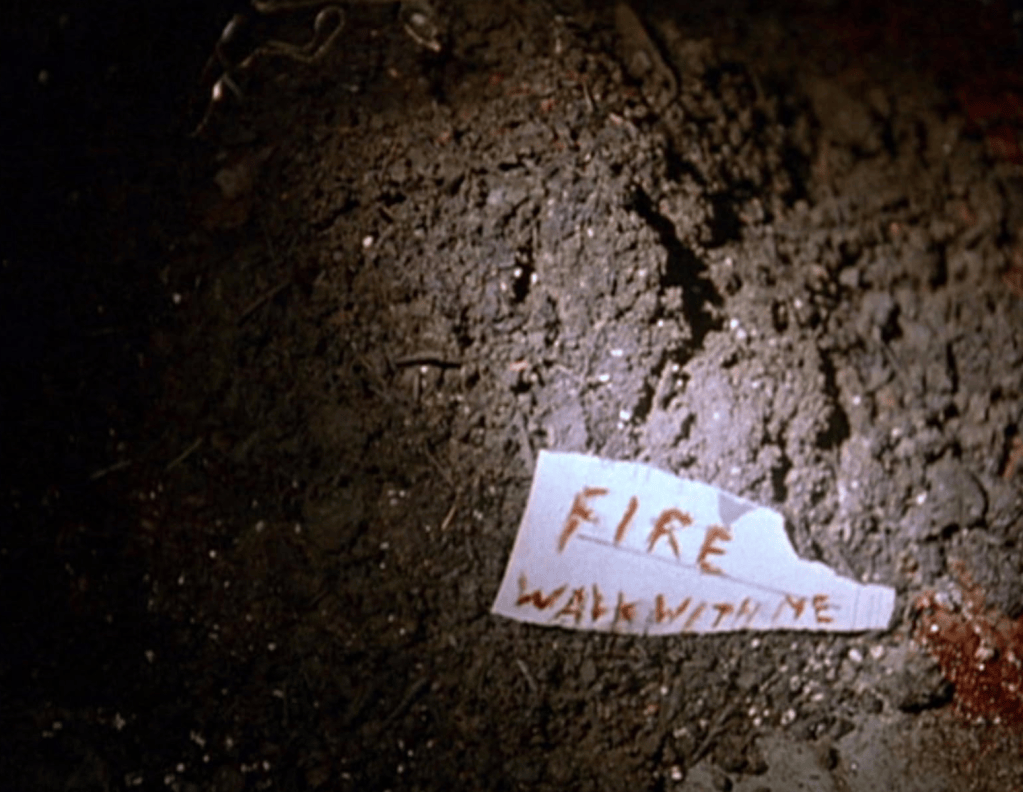
While Agent Dale Cooper and Sheriff Truman are working together investigating Laura Palmer’s body, Dale Cooper looks under her fingernail on her ring finger and finds a single letter “R” on a small slip of paper. This ties in to the case of Theresa Banks from a year prior, where a small “T” was found under her nails.
At the same time, we learn that another person’s daughter has gone missing, Ronette Pulaski (Phoebe Augustine). She ends up walking home tattered and bloody, and ends up in the hospital. In the first interaction with her, she is incoherent, and Agent Dale Cooper finds no letter under her nails. All she can say is “Don’t go there, Laura! Don’t go there!”
I will be honest, I don’t want to spoil too much of the show for you, my avid reader, because this is truly something that is worth experiencing and feeling for yourself. Twin Peaks is an immaculate piece of media. The late 80s/early 90s setting is beautifully portrayed. The story starts off as your sort of average murder mystery in a small town tale, but the directions it goes is unfathomable to those who haven’t seen it. As mentioned before, the entire cast plays each of their characters perfectly, and each character is important and matters in their own right. In this film/first episode alone, we are introduced to well over a dozen characters, and you immediately have an understanding of who they are, their backstory, and why they are here in Twin Peaks.
All in all, this is a show that I try to convince most people to watch. It’s in my personal top 5 alongside HBO’s The Wire, The Sopranos, and Netflix’s Bojack Horseman. I promise you will not be disappointed with diving into the world of Twin Peaks with some black coffee and blueberry pie for your movie snacks.
-4.5 mallards/5
-Seann
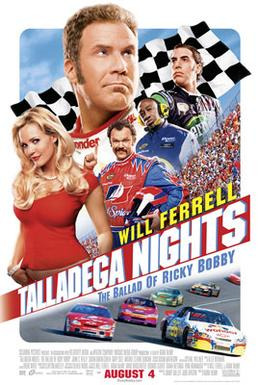
Talladega Nights: The Ballad of Ricky Bobby (2006) is what a previously reviewed movie on this blog, featuring the same starring duo, Holmes and Watson (2018), wishes it could be. I distinctly remember going to see this movie in theaters with my family and enjoying it thoroughly. In 2006 I would have been 13 years old and, therefore, the exact age demographic to which this movie would appeal. Watching it again, 19 years later, it still has hilarious moments, funny goofs, and some witty dialogue. Unfortunately, not everything has aged well.
Watching this movie with an older (and more trained) eye, I was struck by the breakneck pace (no pun intended) at which it begins. They really waste no time setting up the plot – from the time Ricky Bobby is born (the opening scene) to the time he is elevated from the pit crew to the driver and wins his first big race is only thirteen minutes of runtime. That’s an entire youth, adolescence, and a bit of adulthood that’s neatly summed up in the time it takes to eat a bowl of oatmeal in the morning. From there, the pace just increases. This isn’t a movie that lets you sit and really digest anything that’s happening on-screen, but rather ushers you from one funny interaction to the next. There’s some vague attempts at character development, but they’re mostly used to drop one-liners or put characters in situations for humor.
Luckily the humor in this movie, on the whole, works very well. One could argue that the creators and Ferrell himself are ‘punching down’ by making fun of NASCAR fans, who are stereotypically portrayed as dumb and poor. This stereotype is further bolstered by the antagonist in this movie being a sophisticated, well-educated, and homosexual Frenchman (played by Sacha Baron Cohen, who has no issues playing caricatures of other nationalities, to hilarious effect). I think Jean Girard serves as a great foil to Ricky Bobby, because as much of a stereotype Ricky Bobby is in one direction, Jean Girard is that same stereotype, but in the opposite direction. One of the funnier lines of dialogue in the movie comes when either Ricky or Cal (Ricky Bobby’s right-hand man, eventual rival, and friend played by friend of the channel John C. Reilly) asks Jean to name three things that the French ever contributed to the world. Jean says “democracy, existentialism, and the menage a trois.” Cal replies “those are three pretty good things…”
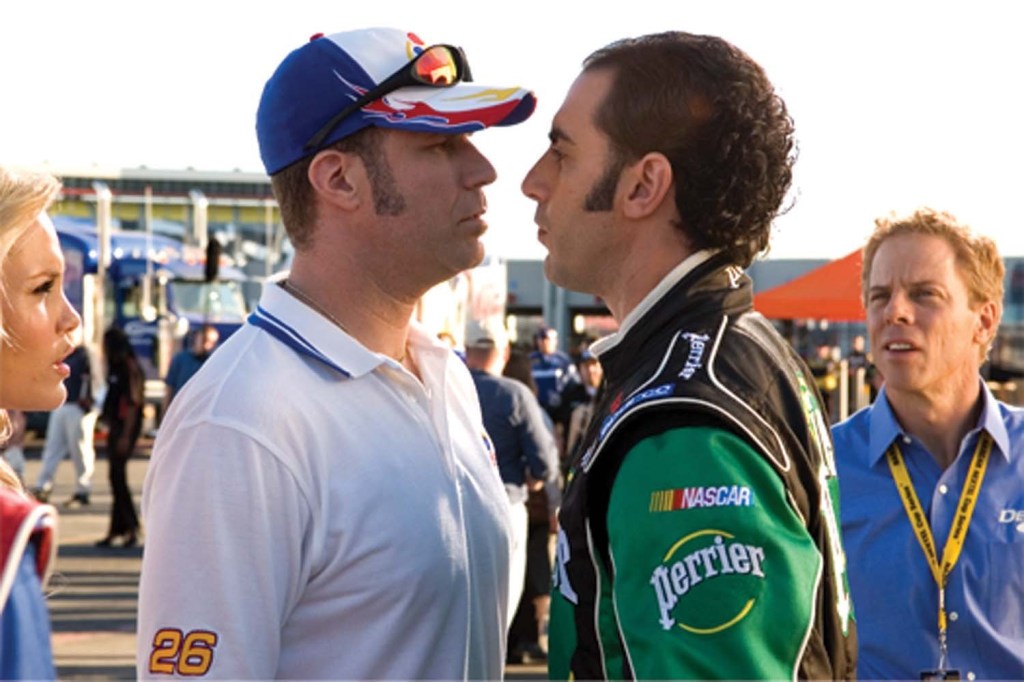
Where things have not aged quite as well are the scenes in the middle of the movie. Ricky Bobby’s fall from grace goes on just a bit too long. I’m talking specifically about the scene where he crashes, embarrassingly, and goes into rehab for his ‘disability’. This section of the movie is just not quite as funny as the rest of it, and him running around on the racetrack is not only long and drawn out, but also, to steal a phrase from the younger generation, a bit cringe. Luckily, on the way back up, Ricky’s dad (played by Gary Cole) comes to the rescue to provide more humor (and also an impeccable fashion sense). The scenes where he’s learning how to re-drive are pretty stupid, but also laughable. The cougar part is borderline.
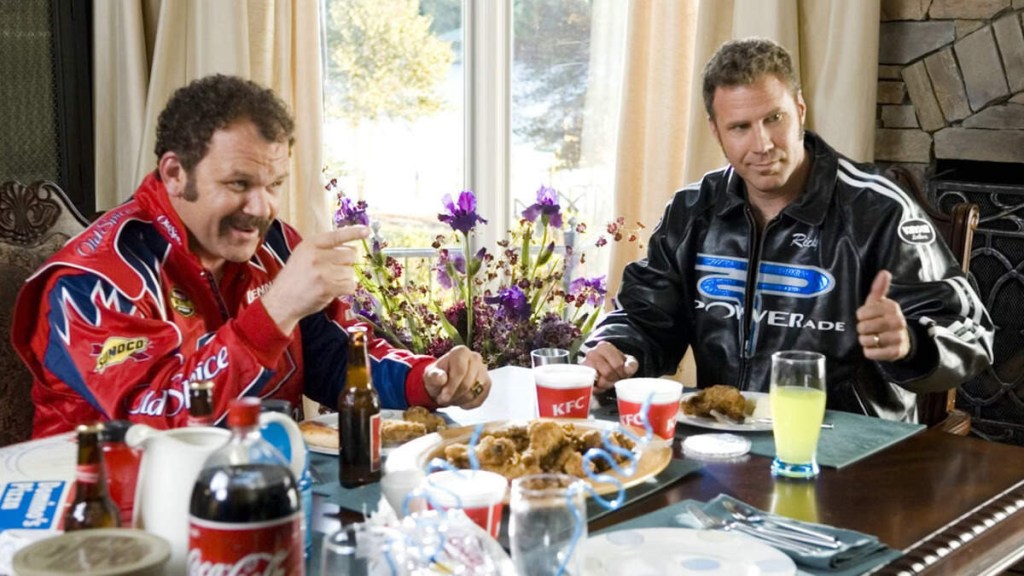
As far as the production of the movie goes, it’s pretty high-quality. The object of the movie is to not let the fact that it’s a film get in the way of making the audience laugh, and it does that to a great degree. I think the soundtrack is perfect – it’s mostly a collection of adrenaline-pumping rock and southern rock-adjacent songs that set the tone for the NASCAR aesthetic. There are some funny visual gags, like when Cal takes over Ricky Bobby’s life, and we see Cal sitting in Ricky’s house wearing his red velvet robe, which is significantly large on him. My favorite quote from the show happens moments before this, when it’s revealed that Cal has married Ricky’s ex-wife. Ricky is bewildered and asks how Cal could do this and Cal looks at him concernedly and says “your marriage was a hollow shell, man. A cruel charade.” It makes me laugh because it’s a strangely poetic comment by someone who is otherwise a buffoon.
I’m having a bit of difficulty finding things to say about this. It’s a pretty well-known movie, and I feel like most people have seen it or at least know the concept of it. Beyond that, there’s not really much to say. If stupid, borderline slapstick humor appeals to you, then this movie will appeal to you. I honestly don’t think this is something that I would recommend people watch if they haven’t seen it before, unless it sounds particularly humorous to them for some reason. It’s not one of the top comedies of all time, and the years have not been very kind to it. I did laugh out loud at one or two scenes, despite even knowing they were coming, but I was largely stonefaced through most of it. I did like it a lot as a kid though.
Talladega Nights: The Ballad of Ricky Bobby (2006) has an IMDB score of 6.6 out of 10, a Rotten Tomatoes tomatometer score of 71%, and a Letterboxd rating of 3.4 out of 5. I think these are all pretty reasonable ratings. If someone said to me that they wanted to watch a funny movie, this isn’t the first one that would jump to mind, but if someone said they were going to watch it I would probably say to them “hey, that’s a funny one.” The iconic line in this one is, of course, ‘if you ain’t first, you’re last’, which has completely gone over the heads of the youth of today, who think it’s a legitimately healthy outlook on life. Even Ricky realizes at the end that you can be second, third, fourth…or hell, even fifth.
-3.5 mallards/5
-Maxwell


Leave a comment