
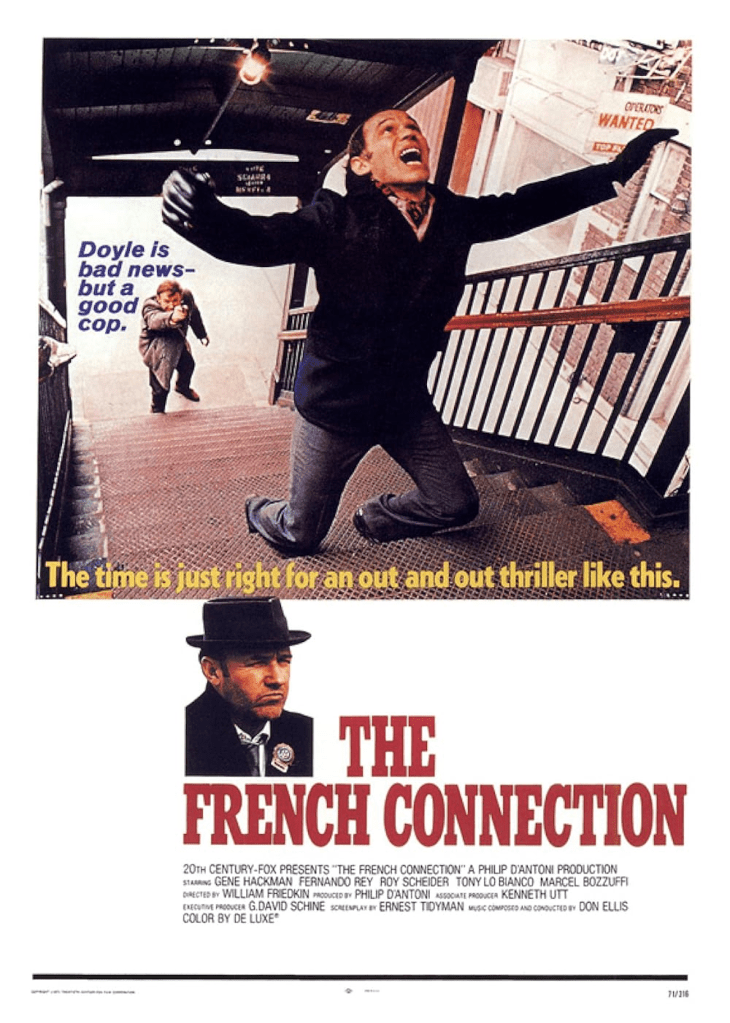
I lucked out for the first week of May by not only picking a movie I had seen previously, but also getting a beloved classic, 1971’s The French Connection. This movie was a resounding success, with a budget of $1.8 million and a worldwide gross of over $50 million, not to mention eight Oscar nominations, five of which it won. A gritty and raw noir-crime drama based on a true story. Not to sound pretentious, but the pacing of a lot of modern films irks the ever loving bajeebus out of me. Dune (2021) is a good example I like to use. Based on an elegantly written and paced novel, one of my favorite books to be honest, but the film adaptation was so slow and junted I couldn’t stand it. The pacing of The French Connection has immaculate pacing. The story is laid out so well and holds your interest from start to finish. Every scene felt purposeful and intentional.
Shot during a grey New York winter at the turn of the decade, it encapsulates the vibe of the late 60s perfectly. Watching it in modern times, it definitely gave me a weird nostalgia for a time that I was never alive to witness first hand. The grittiness and graininess of the way this film was shot and feels sets it as a great period piece. The whole movie feels like it takes place in a wasteland of a city, they show back alleys and bars with drug dealers and bums. There are the (by today’s standard) the classic fires in a garbage can in a few scenes, although I’m wondering how common that was in film back in 1971.
The entire movie from the start is technically one big chase scene. The cops are on the hunt for a $32 million dollar heroin deal coming into the city. The French Connection starts off with a French detective surveilling the Continental, and from that opening scene, the movie never stops being a chase. Sometimes it speeds up, like the iconic train chase scene, and other times the pacing allows the viewer to take a few breaths and process the aforementioned action sequences.
I realized I have said a lot about this film but have yet to mention the cast, which also solidified this as an iconic and timeless piece of media. The main cop that’s leading the charge is Detective Jimmy Doyle (Gene Hackman), whose career was already a decade long, but this movie is what broke him into stardom and a household name. He won an Oscar for best actor for this role. His opposite, Detective Buddy Russo (Roy Scheider) also plays his role extremely well. The French heroin dealer who is coming to New York and the states for the first time, Fernando Rey (Alain Charnier) is a wonderfully menacing villain. From his first appearance on screen you feel the power of his character and the impact he has.
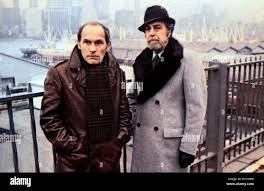
The backstory of this film is also laid out very well, Detective Doyle is a cop on a tirade, and his department is untrusting of his beliefs and actions. In a previous case, he caused one of his fellow policemen to be shot and killed. He also lost that case and never caught the perpetrators. Because of this, every action of his is meticulously analyzed. You as the viewer feel the choke hold that Detective Doyle is put in while trying to do what he believes is the correct course of action to catch this deal before it happens and heroin floods the city.
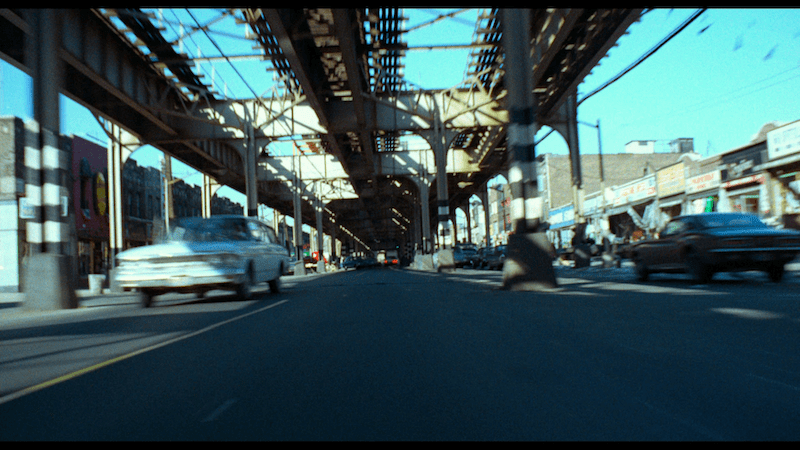
The ultimate chase scene that I referenced earlier is a huge feat of the cinematic. That scene is often remembered as the key piece to this film, but in my opinion, every scene and line of dialogue is as important. The behind the scenes for the chase scene is a deeply interesting achievement of ‘movie magic’. Detective Doyle is driving on the city streets of New York while the perp he is after is on a train on the tracks above the city. The production did not shut down the city streets for this filming, instead they used local police to corral the streets, some of whom worked on the actual case this movie is based on. The anxiety I felt during this epic, minutes-long chase were some of the best feelings I’ve had during a viewing experience ever. You have the perp hijacking the train, shooting the security guards, and threatening the life of the operator. You have Detective Doyle on the streets below weaving in and out of traffic, blaring his horn as he had to hijack a civilian’s car to go after the train. The camera work, use of different lenses to alter the perspective and make it seem like Detective Doyle was closer to certain obstacles and threats than he was is immaculate film making for the time
The ending of this film as far as I’m concerned is wonderfully done in terms of a movie ending. I know there’s some controversy over the ambiguity due to The French Connection being based on a true story, but I think for a film adaptation, it works and serves the audience well.
I am happy to have had an actually well known and well received movie for once on my list for a month. I don’t think I’ve had many movies so far that I’ve rated this highly, or enjoyed watching as much as I enjoyed this one. If you haven’t seen this one, and you call yourself a “film enjoyer” then you are missing out on an important piece of Hollywood’s history.
-4.5 mallards/5
-Seann
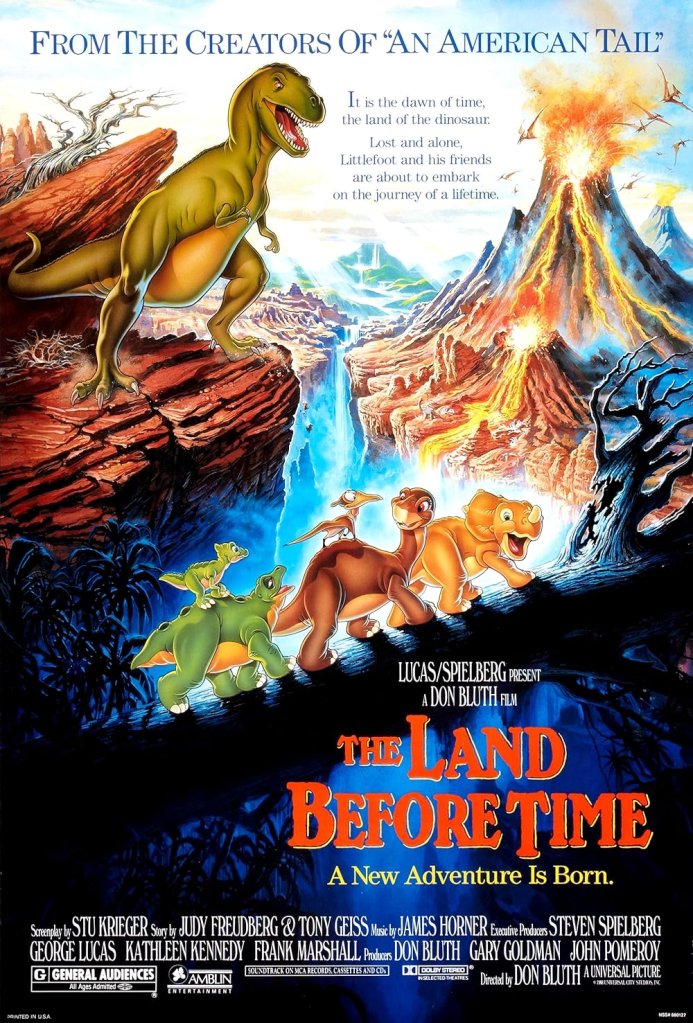
The Land Before Time (1988) is an animated movie, one of the few in fact, that I remember with nostalgia. I liked this movie a lot as a kid because, as most young boys are, I was obsessed with dinosaurs. I remember watching this movie a lot when I would visit my grandparents, and my grandmother would cry and cry during the emotional parts. I mostly just liked the ending scenes where they’re fighting the Sharptooth and getting stuck in the tar pit because, again, as a young boy I didn’t care for all the mushy stuff.
Well, some things never change – this movie is an abhorrently saccharine and pseudo-spiritual snoozefest. I guess I shouldn’t be surprised, since it’s for kids, but still, there’s very little interest in the plot to me as an adult and, not to brag, but I didn’t even cry a single time. Despite all this, and my use of the word “abhorrent”, this movie is great. It is so much ‘of its time’ that it’s hard not to enjoy it. I forgot before I watched it again that George Lucas and Steven Spielberg produced it, likely because as a young child, those names meant nothing to me.
The basic premise is pretty simple. There’s some sort of climatic event going on that is causing a shortage of edible plants for our protagonists to enjoy. The main character, or dinosaur, named Littlefoot, is on a quest to find a valley, which may or may not exist, that has more green leafy food than you can believe. Along the way he befriends a triceratops, some sort of little water creature, a pteradactyl, and a stegosaurus. Anyone who knows me knows that I claim the Quetzalcoatlas as my favorite animal, so obviously the baby pteradon is my favorite character. Anyway, along the way they encounter dangers like the aforementioned Sharptooth and tar pits, and get lost and separated. Eventually, to the surprise of nobody, they manage to make it to the valley (it did exist) and reunite with their respective families.
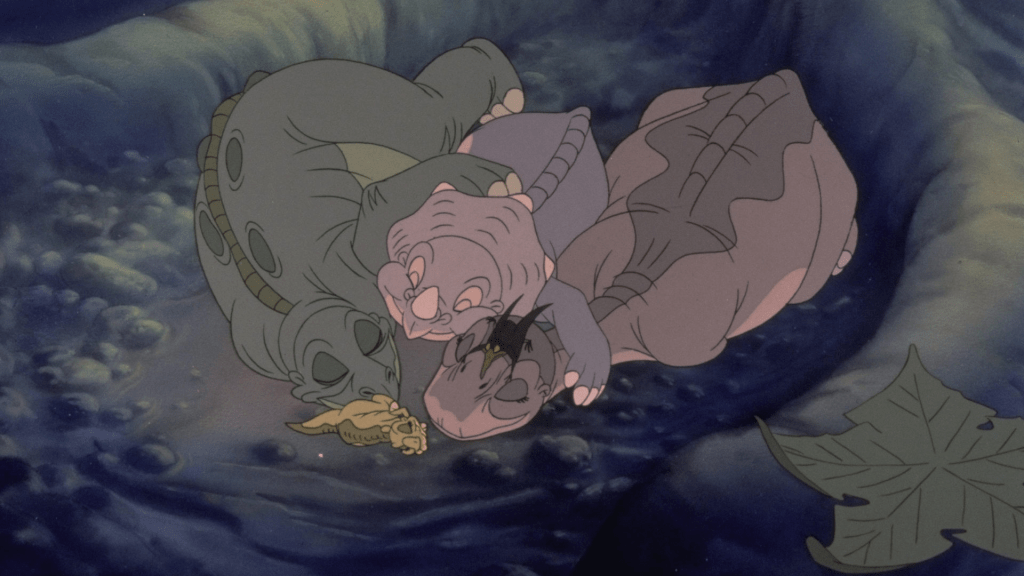
It’s hard to really criticize this movie for anything, because it honestly is pretty well-made and accomplishes the goals that it sets out. The animation is at times a bit choppy, the character designs can change from frame to frame, and they sometimes have strange coloring. These flaws are what gives the move its lasting charm. It cemented itself in the late 1980’s. This seems like the exact type of movie that would be re-made today with hyper-realistic animation, smooth frame rates, and an updated sound font, which would of course all ruin the movie.
I think the biggest criticism I have with this movie is a lack of re-watchability. I think as a kid you could watch this a few times and it’ll still be exciting, because you have so many fewer things to compare it to, but as an adult I think watching this more than once every couple years would be extremely unrewarding. There’s not much here to really explore or sink your teeth into (no pun intended). It’s mostly just a wholesome story about some dinos going for a stroll, and watching it twice (back-to-back, even) was a real chore.
The most obvious plot hole in this movie is that the dinosaurs speak English. Even if we only look at the main character, Littlefoot, who is some type of generic Sauropod, the absolute latest he could have existed is the Late Cretaceous period, about 66 million years ago. Astute readers might note that the English language, even in its oldest form, was not created until the middle of the 5th century. So how do the dinosaurs speak English? This is something they do not address in the movie, but something for which we should demand answers from Lucas and Spielberg.
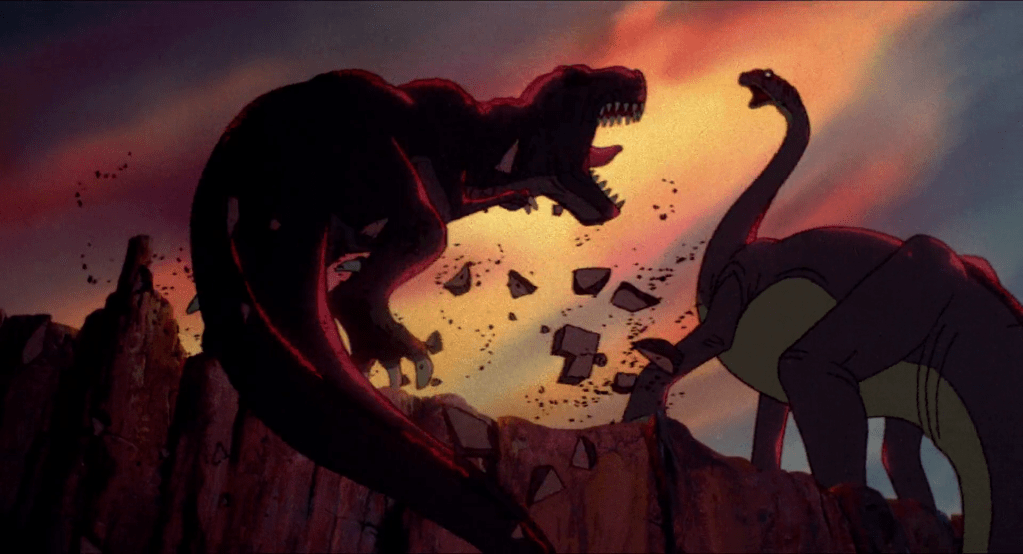
I’m not sure if this is meant to be a religious movie or not, but there are definitely semi-religious undertones. In the first five minutes, the mother dinosaur says “some things you see with your eyes, and some things you see with your heart.” This is in response to Littlefoot asking her if she has never seen the great valley (full of green trees and plants), then how does she know it exists? Interesting. There’s a discussion of the circle of life, there’s some hints of environmental annihilation. This is a movie that you can read a lot into if you’re so inclined, but there’s not anything to back up any particular interpretation. It’s just a kid’s movie, meant to appeal to kids, with dinosaurs in it.
The Land Before Time (1988) has a score of 7.4 out of 10 on IMDB, a Rotten Tomatoes tomatometer score of 65%, and a Letterboxd score of 3.8 out of 5. It’s hard for me to really say when it would be an appropriate time for an adult to watch this movie on their own, or in the company of other adults. I think as far as children’s movies go it’s one of the great non-Disney ones out there. I dunno…I’m not a kid.
-3.5 mallards/5
-Maxwell


Leave a comment