

For the first week of November, I chose what I consider a classic by today’s standards, The Simpsons Movie (2007). I am a lifelong fan of The Simpsons. One of my “special talents” as I like to call it is that I have seen every episode of the series to date. It’s a show I keep up on, even after 38 seasons. Not every episode, or even entire seasons nowadays are “good” necessarily, but a lot of what made the show iconic is still around. This is a movie that I saw in theaters as a teenager, more than once. It still holds up to this day in my expert opinion.
The Simpsons is a show that has done its fair share of “going big” episodes. But something about the approach and storyline of the movie makes it really feel “larger than life.” The animation is stellar, you can tell it’s done in a different way than the TV show was at the time, but it still looks and feels like The Simpsons we all know and adore.
The storyline is interesting, and not something that could be properly tackled in a single 30 minute weekly episode. Like I said above, everything feels like The Simpsons we all are already familiar with, just done in a much bigger way for the big screen. I truly believe that the creators and writers captured lightning in a bottle with this one. It’s hard to translate a 30 minute weekly sitcom into a feature length 87 minute film.
The summer this movie was released, everyone had “Spider-Pig” stuck in their head. That’s just the kind of thing The Simpsons is good at doing, being a piece of the cultural zeitgeist that (at the time the movie came out) was still relevant 18 years after its first episode aired.
The movie’s plot is fairly simple, but it’s The Simpsons, of course it’s not going to be some big complex thing. It follows the aftermath of what happens to their hometown of Springfield after they pollute their local lake too much. Spider-Pig’s waste silo that Homer (Dan Castellaneta) dumps into it is the catalyst for the government, EPA, to decide to put a glass dome over the city to trap its residents and pollutants inside together. The Environmental Protection Agency is run by the movie’s ‘villain’, Russ Cargill (Albert Brooks) who has a vendetta against the town and the townsfolk. He uses his power to get Presidential approval on all of his schemes. This glass dome turns the entire town against Homer, and in classic mob fashion (something the people of Springfield are not unfamiliar with), they show up outside of The Simpsons’ family home and threaten Homer. The plot first becomes about The Simpsons escaping to Alaska, but they quickly learn that Russ Cargill’s ultimate plan is to wipe Springfield off the map, and create a second Grand Canyon. Therefore they must return home and save the day.
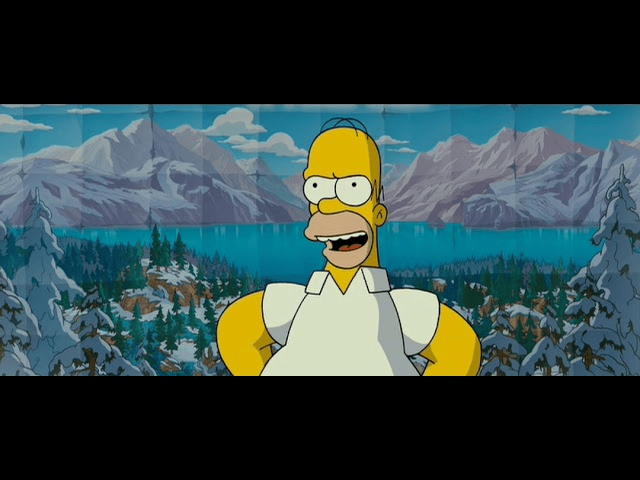
The humor in this movie is better than a lot of the later seasons of The Simpsons. One of the best jokes in the entire movie is after the dome is placed over the town, we see a shot of the iconic Springfield Church where the churchgoers run out and head to Moe’s Tavern, while the alcoholics from Moe’s Tavern swap places with them and go to pray at the church.
The Simpsons Movie still holds up to this day, and is still entertaining, especially if you’re already a fan of the series. It has a classic supporting cast, like Milhouse (Pamela Hayden), Lisa (Yeardley Smith), Chief Wiggum (Hank Azaria), and seeing all of these known and beloved characters really helps translate the show to the big screen.
The storyline while being simplistic is still an interesting one to have for The Simpsons in general. Many times they have had sincere and meaningful plots throughout the series, but this one heavily revolves around one person’s environmental impact and how it can affect the community around them. The themes may be presented through a comedic lens, but it still leaves the viewer with much to think about after the credits roll. At the same time, because it is The Simpsons, which is an animated comedy first and foremost, the social and environmental comedy is not explored particularly deeply, and at times the movie does abandon its message for the sake of a joke.
Overall, The Simpsons Movie is entertaining, and it succeeds in its attempt to bring a beloved long running TV show to the silver screen. Its upgraded and colorful animation, voice acting, and collection of both funny and sincere moments make it an enjoyable experience.
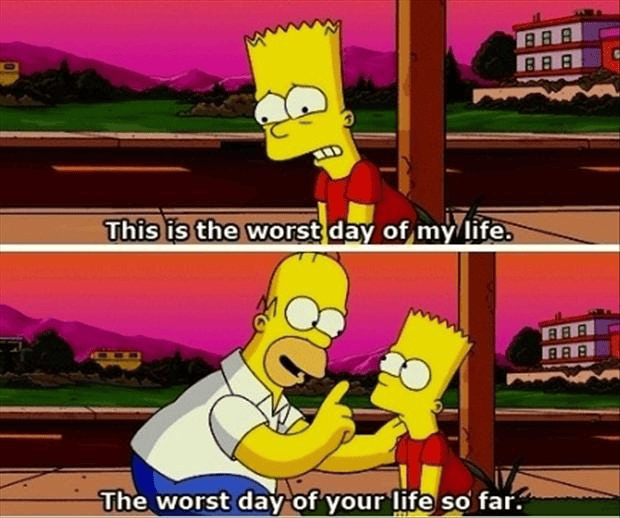
The Simpsons movie has an IMDb rating of 7.3/10, a Rotten Tomatoes critic score of 87%, audience score of 77%, and on Letterboxd it has a 3.5/5. This is about where I believe it should sit in the rankings. It is a solid and fun movie, and does a good job adapting the TV show to a movie. I think that fans of the series and non-fans alike can both enjoy this movie with a couple of Duff Beers at home and a nice bucket of buttery popcorn (mmm… popcorn). The Simpsons Movie also has a few standout achievements, with a budget of $75,000,000, it made that back in the US and Canada alone opening weekend with a gross of $74,000,000. Including worldwide releases, it grossed $167,000,000 opening weekend. It was a major success during its theatrical run. It’s also the only feature length animated movie with a PG-13 rating that has ever been nominated for a Golden Globe Award. It’s also the only movie based on a TV show to ever be nominated for one as well. Next year, we will get to see if the creative minds behind The Simpsons can capture lightning in a bottle twice with the (long awaited?) sequel movie releasing.
3 mallards/5
-Seann
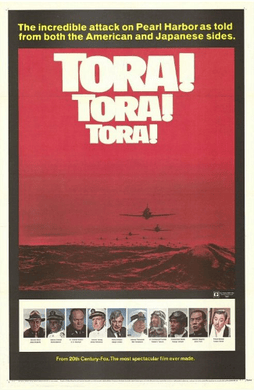
Tora! Tora! Tora! (1970) is a film with which I was tangentially familiar in that I knew it was about the attack on Pearl Harbor, which is unique because, coming out in 1970, it was less than three decades removed from the event itself. Imagine if they made a movie about 9/11 today – it’s hard to imagine. Nevertheless, I wasn’t sure exactly what type of movie it was. The obvious example of a major motion picture about Pearl Harbor is the creative and imaginatively titled Pearl Harbor (2001), directed by Michael Bay. Whereas Pearl Harbor (2001) is an extremely dramatized, emotional, and bombastic representation of the events of December 7th 1941, Tora! Tora! Tora! (1970) is a much more journalistic and almost documentary-style look at the events, individuals, and weeks leading up to the attack itself.
Another aspect of this movie that makes it unique from Pearl Harbor (2001) is that it follows closely not only the American military and politicians, but the Japanese figures involved as well. Despite being produced in America, it doesn’t depict the Japanese in a negative light, which is something for which it should be admired. One feels if there were to be a 9/11 movie of this sort that the anti-US perpetrators would be depicted horribly, with no empathy or compassion, almost sub-human. I didn’t calculate the numbers, but I wouldn’t be surprised if we actually spend MORE time in this movie with the Japanese than we do with the Americans.
To say the film is a meticulous recreation of the events is, shockingly, an understatement. From doing some research, it seems that historians and experts on the Pearl Harbor attack praise this movie for its accuracy and attention to detail. It seems like you could teach a High School class about the attack just by having them watch this movie, which is something very few non-documentary films can claim. Again, when you consider that this film came out not even three decades after the events that it depicts, it becomes even more impressive.
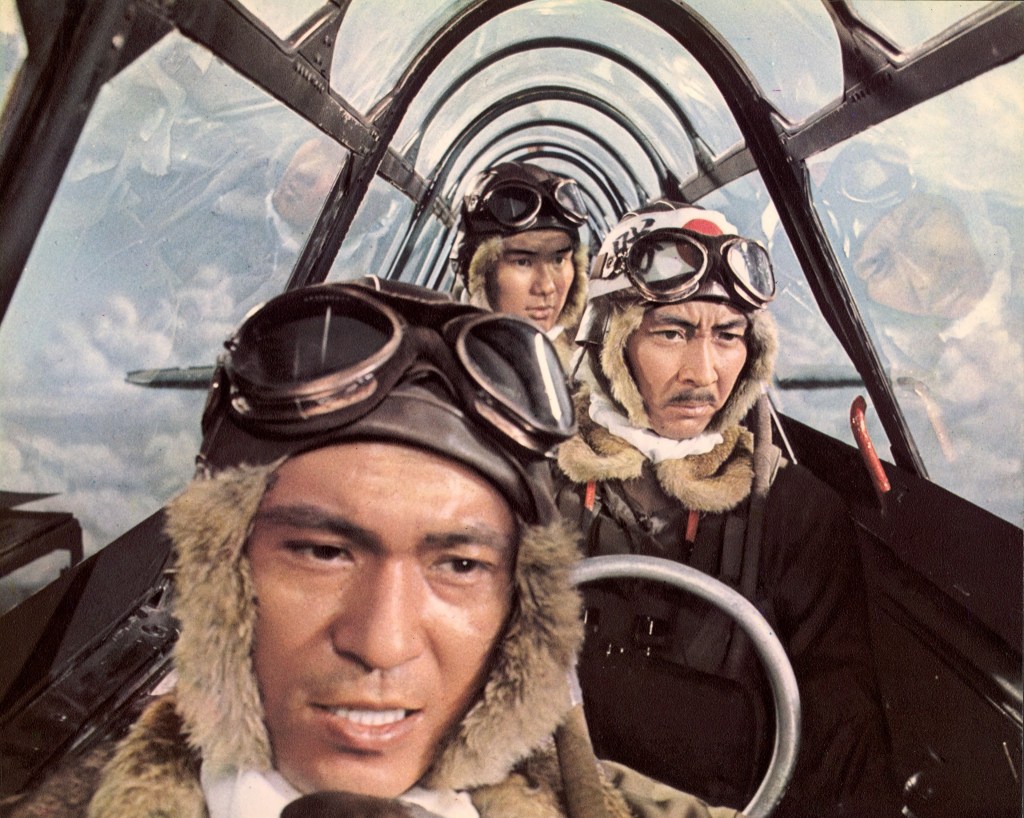
On one hand this rigid devotion to historical accuracy makes this film feel as if one is experiencing the events as if the viewer was a fly on the wall. On the other hand, the events happening in the room in which the fly is buzzing are extremely dull and dense. I’m someone who relishes and enjoys and becomes fascinated by slow-developing films. I often say that my favorite films are the ones where nothing happens, which is a tongue-in-cheek way of saying that I enjoy films and media which focus on the hidden significance of ordinary experience. Some of my favorite movies where nothing happens are Perfect Days (2023), Umberto D (1952), and Paterson (2016). The ironic thing about Tora! Tora! Tora! (1970) is that something DOES happen, in fact a pretty major thing, but the lead up to it is so devoid of emotional intent that it falls flat.
Compared to Pearl Harbor (2001), this film is an absolute snoozefest. It’s dull, uninteresting, and it’s also a bit hard to follow what’s going on. I found my mind wandering pretty often, despite my best efforts to pay attention, and during the intermission (yes, there’s a title card that says ‘intermission’ and there’s a pause in the film) I had to engage in some sort of dopamine-producing activity. This is pretty rare for me, as I generally can ‘rawdog’ (to use a modern slang) most things these days. Of course, when watching Pearl Harbor (2001) I’m totally put off in the other direction – it seems bombastic and explosive simply for the effect of spectacle, which is anathema to my personal aesthetic ideals.
There are strong performances in this movie, both on the sides of the Americans and the Japanese. What’s odd is that we never actually see the President. There are, of course, references to ‘Washington’, but the President is never actually depicted on-screen. I guess this isn’t really that important, but I kept waiting for him to appear and he never did. That word, ‘waiting, is how I would describe what I did for most of the movie. It’s no secret what happens at the end, but it is quite a long slog to get there. I’m not sure what the goal was in creating this movie – if it was to create an incredibly precise and historically-accurate documentary-esque drama, then it succeeded. I have my suspicions that this was the goal, however, considering this was (at the time) a blockbuster which cost over $25million to make. For reference, that’s the equivalent of about $215million today. Wowza! The Odyssey (2026), which by many accounts is the best modern example of Hollywood production bloat, cost around $250million to make.
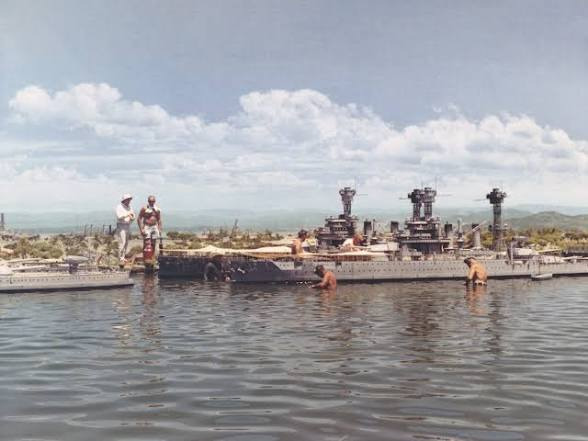
When we’re finally done waiting, and the order is given for the Japanese fighters to strike (the codeword to initiate the attack is the eponymous ‘Tora! Tora! Tora!’), the action falls a bit flat. How could it not? Two hours of long-winded politicians and army generals talking back and forth about what’s going to happen or what’s not going to happen, and the audience’s expectation of naval and aerial combat, could only have been satiated by a Pearl Harbor (2001) type of action sequence. I think if you somehow Frankensteined these two films together, taking the historical accuracy and dull lead-up from this film, but spliced in the battle scenes from Pearl Harbor (2001), you’d have a real winner.
Tora! Tora! Tora! (1970) has a rating of 7.5 out of 10 on IMDB, a Rotten Tomatoes tomatometer score of 57%, and a Letterboxd rating of 3.7 out of 5. Taking a look at some of the reviews, it seems this film is rather polarizing. The low ratings are from people who found it hideously and unwatchably boring, and the high ratings are from those who value the historical accuracy. This makes sense, and I feel like these days most folks who watch a movie are looking to be entertained as opposed to informed. I am not ‘most folks’.
3.5 mallards/5
-Maxwell


Leave a Reply